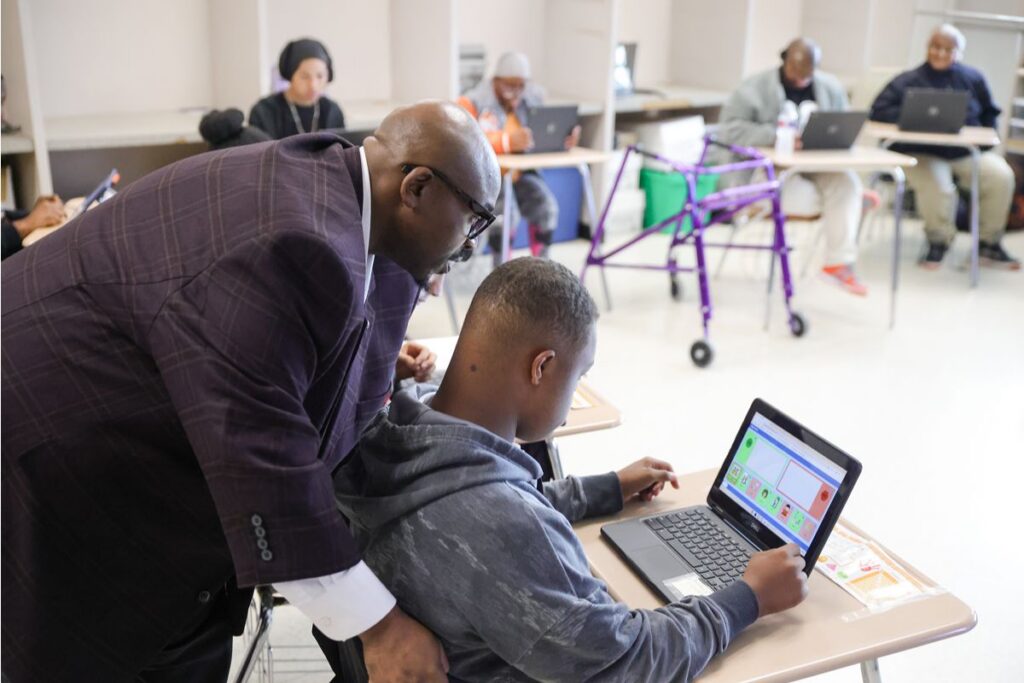

Why the future of student success depends on connecting supports for both learners and the adults who guide them.
Across districts, one pattern shows up again and again: too many programs, not enough progress.
Over time, well-intentioned efforts to improve student outcomes have multiplied. There’s a program for SEL, another for behavior, one for mental health, one for professional development. Each adds value on its own – but together they create a tangle of initiatives, logins, and data that rarely connect.
District leaders know the symptoms: inconsistent implementation, initiative fatigue, and exhausted educators. The more programs districts adopt to help students, the more complex the work of teaching becomes.
It’s time to rethink the model. The solution isn’t more programs – it’s connected systems that bring everything together. That shift begins with platform thinking.
The Hidden Cost of Program Overload
Every program promises to solve a problem. But when dozens of programs coexist without integration, they end up creating new ones:
- Fragmented experiences for educators who must toggle between systems that don’t share data or language.
- Duplicated efforts across departments, each running its own initiatives with overlapping goals.
- Lost time as teachers re-enter data, learn new systems, or search for resources spread across multiple portals.
Behind every new program lies more cognitive load for staff. And when educators spend more time managing systems than connecting with students, progress slows. Complexity doesn’t just strain operations – it drains morale.
The System Beneath the Stress
What educators often describe as stress or burnout is, at its core, a systems issue. The structure meant to support them has become too complicated to sustain.
When districts rely on a patchwork of tools, even strong frameworks like MTSS or PBIS lose traction. Professional learning feels disconnected from classroom reality. Behavior data lives in one portal, SEL progress in another, student growth in a third.
Without a unifying structure, great initiatives compete for limited bandwidth. Teachers do their best to connect the dots, but the system isn’t built to make it easy. This is where platform thinking begins – by asking how to design environments where students and educators can both thrive.
What Platform Thinking Means
Platform thinking isn’t about software. It’s about shifting from program management to system leadership – creating a foundation where all supports work in harmony.
In education, that means uniting:
- Academic supports such as curriculum and assessments
- Behavioral and emotional supports like SEL and mental health resources
- Educator supports including wellbeing, professional growth, and data tools
When these live within one connected platform, the result is clarity, consistency, and measurable progress. Platform thinking transforms isolated programs into a cohesive ecosystem that supports both the Whole Child and the Whole Educator – because sustainable success depends on both.
The best way to strengthen student outcomes is to strengthen the systems – and the people – that make those outcomes possible.
The Whole Child + Whole Educator Connection
Most frameworks rightly focus on the Whole Child: supporting academic growth, social-emotional wellbeing, and a sense of belonging. But what’s often missing is the other half of the equation – the Whole Educator.
Educators need the same kind of intentional support we expect them to provide for students: wellbeing, professional development, and efficient systems that honor their time.
The future of student success lies in connecting these two dimensions through a single, unified platform:
- The Whole Child sits at the center – representing every learner’s academic, behavioral, and emotional needs.
- The Whole Educator forms the sustaining outer layer – representing the adults’ wellbeing, capacity, and confidence to meet those needs.
When these dimensions work together, schools stop fighting uphill battles and start building sustainable momentum.
The Platform Advantage
Districts embracing platform thinking are beginning to see results that go beyond incremental gains.
- Simplified operations: Educators log into one place for lessons, data, and professional learning.
- Improved fidelity: Frameworks like MTSS and SEL are implemented consistently across schools.
- Better outcomes: Connected supports lead to fewer disciplinary incidents, stronger attendance, and improved staff retention.
In Newton County, Georgia, for example, a connected rollout of RethinkEd’s student and educator supports led to a 24% drop in disciplinary incidents within just two weeks. Educators reported higher morale and improved collaboration. These results demonstrate that integration isn’t just a technical improvement – it’s a human one.
Student success accelerates when districts move from managing programs to building connected platforms that support the whole ecosystem.
RethinkEd Share this
Building Systems That Last
The education sector doesn’t need more initiatives – it needs alignment. Districts have the vision, frameworks, and expertise. What they need now are the systems that make those investments sustainable.
Platform thinking gives them that foundation. By uniting Whole Child and Whole Educator supports in one connected ecosystem, districts move from scattered efforts to strategic impact.
Students experience consistent, compassionate environments. Educators feel supported, capable, and connected. Leaders gain the visibility to make decisions grounded in data and human insight.
When schools shift from program overload to platform thinking, success stops depending on heroic effort – and starts depending on healthy systems.
The future of student success is connection. And the platform that connects students and educators is the one that will define the next era of learning.